![[Zionazis-1.jpg]](https://blogger.googleusercontent.com/img/b/R29vZ2xl/AVvXsEg_x8DOGucgHQmfJJujuK_oYJdxhEnskhQqt-Og7lSk52HeaDQYzW8NQWfdpHmPgj_FJN0jJ3tz1prR1jVZHdHky2HDQxxcs4LVxX0DtAt3fG0sfRr6MDx7Sz8cJNjl0k0RS9TbCjangQ/s1600/Zionazis-1.jpg)

| Find |







Wednesday, 16 April 2008
Area C
"How would you feel when you've spent 20 years finishing your life's project?" said Suleiman, 38, a teacher. He began moving his furniture out after the letter, from the civil administration of Judea and Samaria, the defence ministry department responsible for the Israeli-occupied West Bank, came on January 31. Now there are just a couple of plastic chairs in his front room and in the hallway the carpets are rolled up and ready to be moved. Clothes are piled on the floor and the shelves are empty, save for a stack of documents charting the story of the impending demolition. His brother, Husam, has already left the ground floor flat but the new washing machine and fridge stand still wrapped in plastic. Suleiman, his wife and two children wait for the bulldozers.
"Everything I did in my life was for what's now inside this house and now it's going to be destroyed," said Suleiman. "It's very hard for me to find somewhere else to live."
The Israeli authorities argue that Suleiman's house was built in a part of the West Bank known as area C, a designation from the era of the Oslo Accords which means Israel has full military and administrative control. In order to build, a Palestinian must apply for a permit from the Israeli authorities. If there is no permit - as in Suleiman's case - the building is liable for demolition.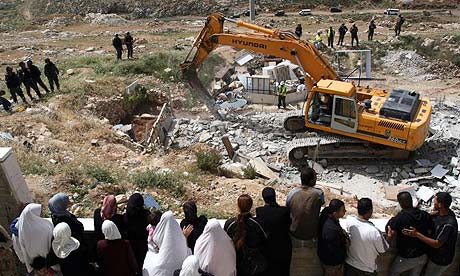
Palestinian watching the israeli demolish their homes thanks to the 'Oslo Accord'

Subscribe to:
